The skills that matter are changing.
We're entering a decade where skills are being redefined in real-time.
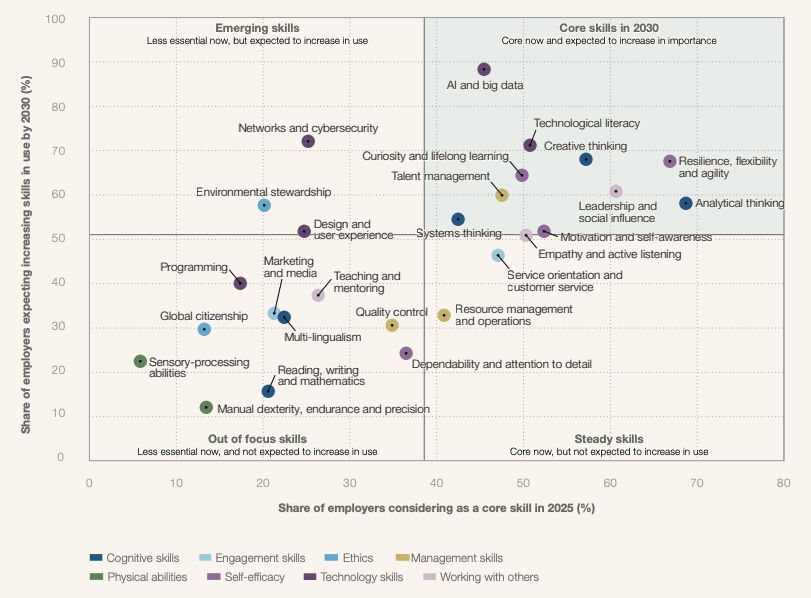
Skills are changing faster than training can follow. AI fluency and technological literacy aren't optional add-ons anymore. In healthcare, that shift is already at the bedside, in documentation, in imaging, and across operations.
Source
- World Economic Forum. Future of Jobs Report 2025. Insight Report, January 2025. ISBN 978-2-940631-90-2.
What skills matter now?
Fading
Emerging
Routine execution, static expertise, hierarchical knowledge: the skills of a stable world. They're losing ground. What's rising is adaptability, systems thinking, and the tech-fluency to work with AI, judge its outputs, and adjust when context changes.
Source
- Jen Denwar. Skills on the Rise in 2025. LinkedIn Talent Blog, Mar 26, 2025.
AI is no longer optional. It's already in the work.
of job skills will shift by 2030, largely due to AI
LinkedIn Talent Blog, 2025
of knowledge-worker tasks will involve AI soon
CFTE & AIFA, 2025
will use AI
CFTE & AIFA, 2025
will build it
CFTE & AIFA, 2025
of public servants worldwide already use AI
Public First, 2026
Sources
- Jen Denwar. Skills on the Rise in 2025. LinkedIn Talent Blog, Mar 26, 2025.
- Centre for Finance, Technology and Entrepreneurship (CFTE). AI Literacy: Understanding and Implementing AI Literacy (Version 0.3). CFTE & AIFA, 2025.
- Public First (2026). Public Sector AI Adoption Index 2026: Closing the Gap Between Promise and Practice. Center for Data Innovation.
AI fluency, not literacy. Not awareness. Competence.
AI fluency is the ability to use AI effectively and responsibly in real work. It combines judgment, contextual understanding, and the skills to apply, judge, and communicate AI-supported decisions.
Apply
Use AI in real tasks: drafting, summarizing, prioritizing, deciding.
Judge
Know when to trust an AI output, when to question it, when to override it.
Communicate
Explain how AI influenced a decision, to colleagues and to patients.
Sources
- Dakan, R. & Feller, J. (2025). Framework for AI Fluency (v1.5).
- Anthropic (2026). AI Fluency Index.
- Accu-Health (2026). AI Fluency Framework for Healthcare Leadership.
Most clinicians use AI every day. Without structured training.
Imaging tools
Highlighting suspicious lesions and prioritizing reads.
Clinical decision support
Risk scoring, sepsis prediction, dosing recommendations.
Ambient AI scribes
Recording patient visits, drafting notes for physician review.
Scheduling and workflow
AI-powered staffing, appointment routing, capacity planning, and patient message triage.
LLM admin tools
Documentation help, summarization, drafting patient communication.
Literature search
Finding relevant papers, summarizing guidelines, staying current with evidence. The second most common daily AI use by clinicians.
Sources
- Sezgin E, Lee JA, Jadczyk T, Taxter AJ. Patterns and Predictors of Artificial Intelligence Use Among Healthcare Professionals in the United States and United Kingdom. medRxiv, 2026. DOI: 10.64898/2026.05.01.26352171
- Poon MTC et al. Adoption of Artificial Intelligence in Healthcare: Survey of Health System AI Leaders. PMC, 2025.
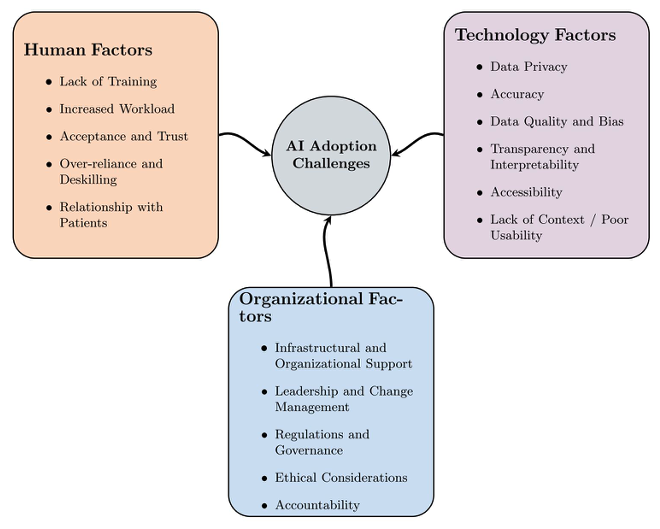
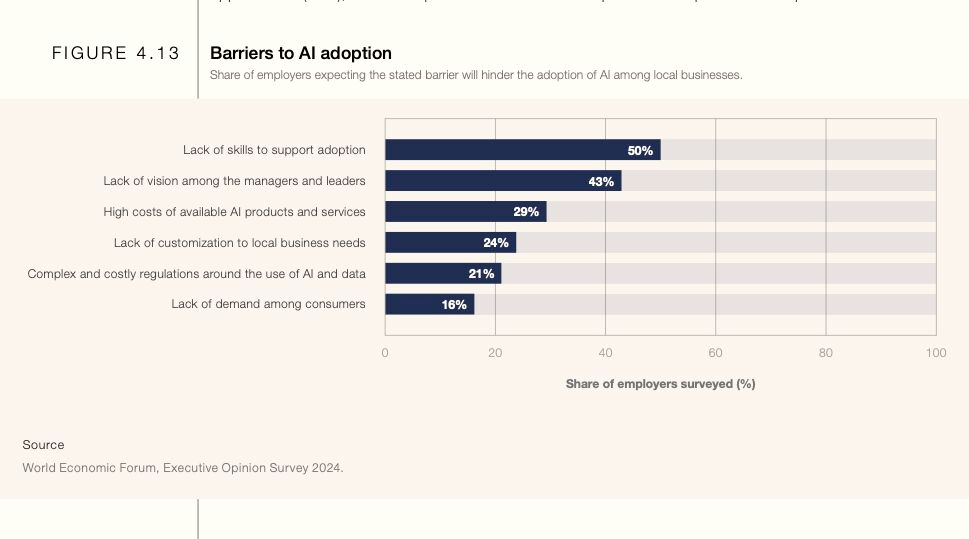
Lack of skills is the #1 barrier to AI adoption.
58% of clinicians already use AI in practice. 93% say they need more training. 32% already see patients arriving with AI-generated health information. Adoption is running ahead of competency. The gap is widening.
6 peer-reviewed papers Tap to expand
The research backs it up. Across multiple peer-reviewed studies and reviews:
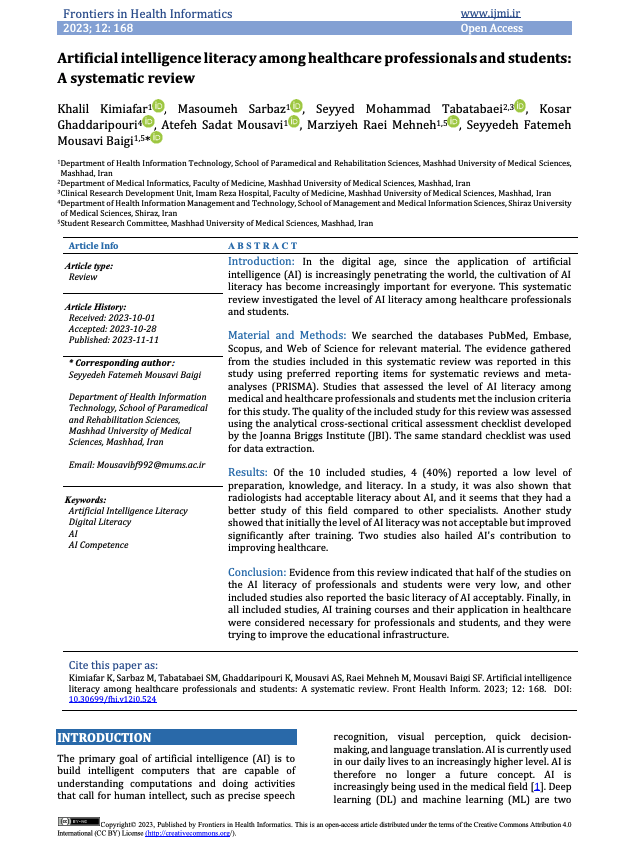
Kimiafar et al. (2023)Systematic review · Front Health Inform · Clinicians lack training to use AI safely
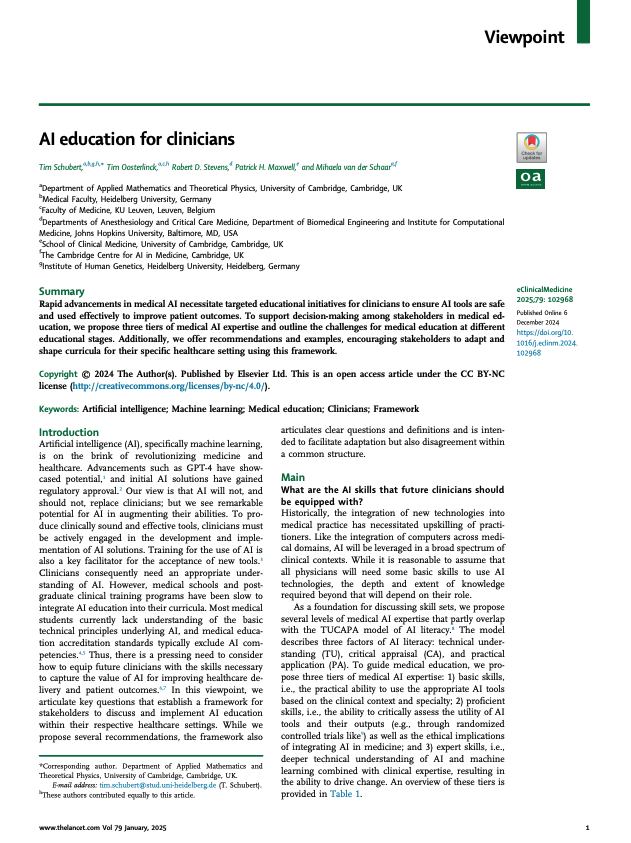
Schubert et al. (2024)Lancet eClinicalMedicine · The case for structured AI education for clinicians
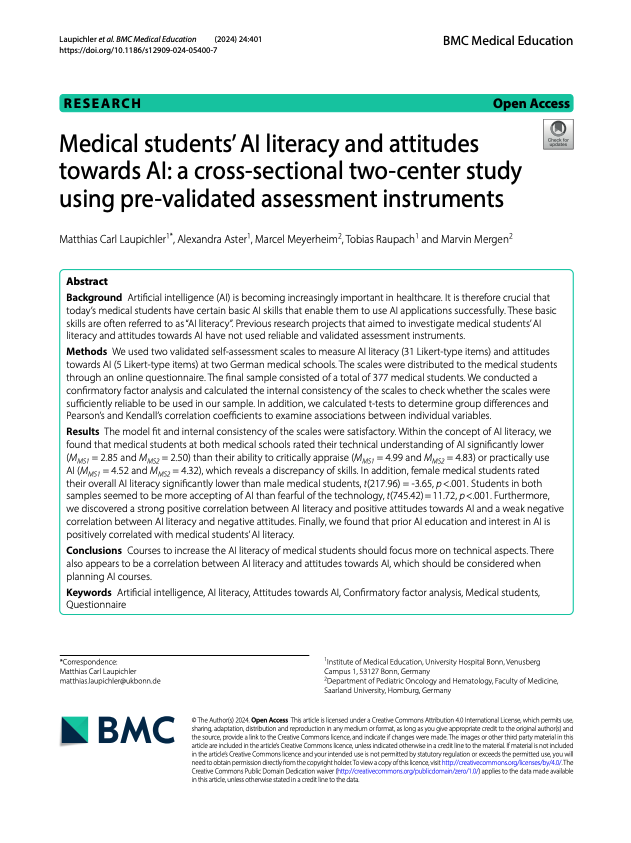
Laupichler et al. (2024)BMC Med Educ · Medical students show measurable gaps in AI literacy
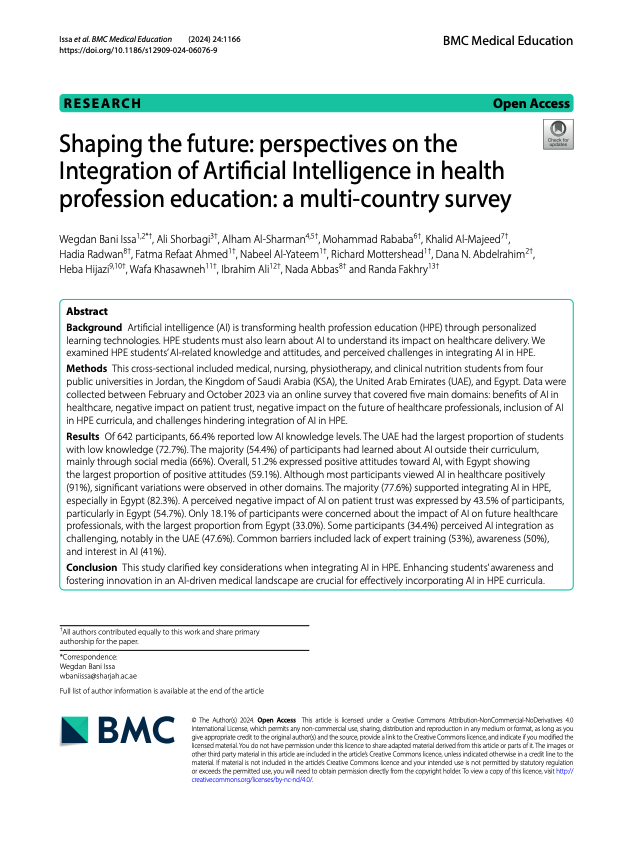
Issa et al. (2024)BMC Med Educ · Competency gaps appear across roles and countries
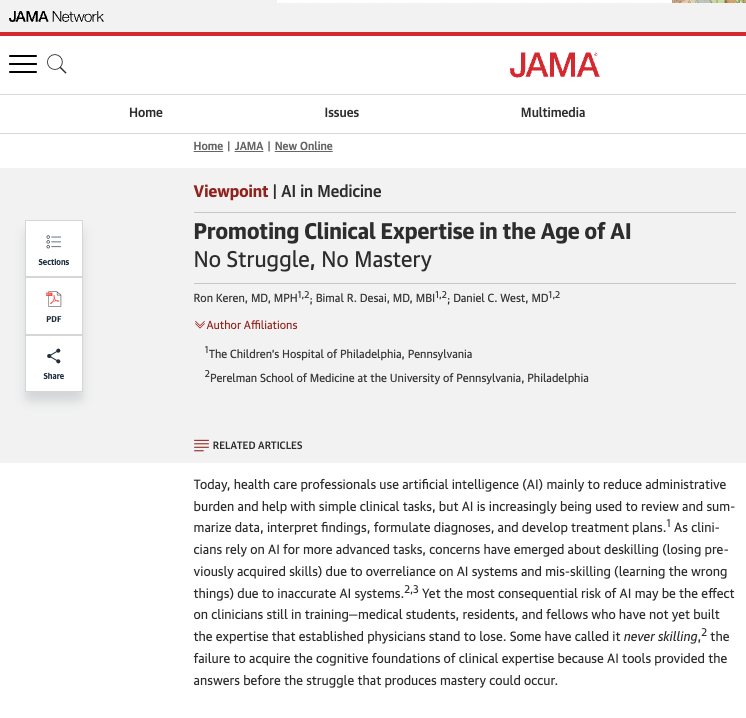
Keren et al. (2026)JAMA · AI's deepest risk is "neverskilling" — trainees who never develop clinical expertise because AI removes the struggle that builds it
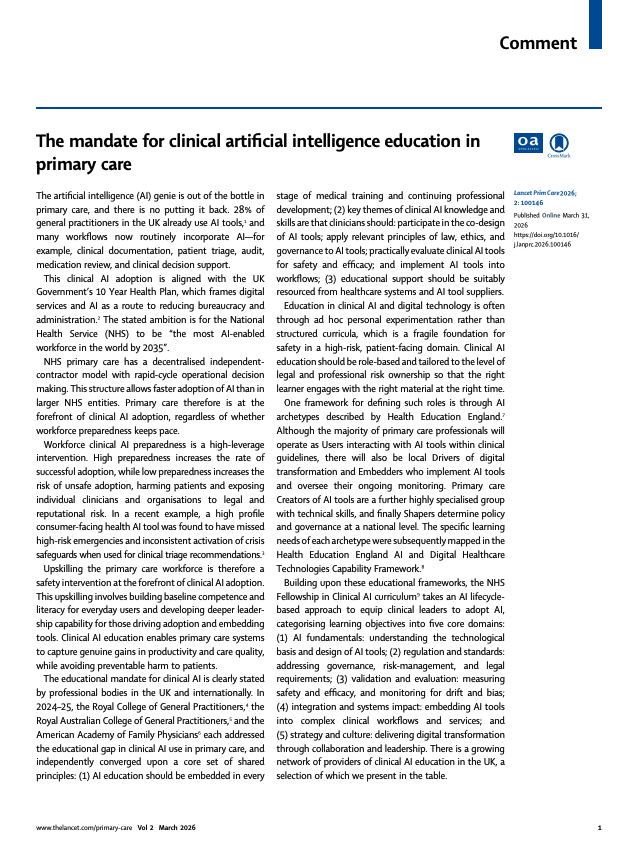
Deng et al. (2026)Lancet Primary Care · 28% of GPs already use AI but training remains ad hoc. Workforce preparedness is a patient safety issue
Sources
- World Economic Forum. Future of Jobs Report 2025.
- Abdelwanis M, Simsekler MCE, Gabor AF, Sleptchenko A, Omar M. Artificial intelligence adoption challenges from healthcare providers' perspectives. Safety Science 2026. DOI: 10.1016/j.ssci.2025.107028
- Kimiafar K et al. Artificial intelligence literacy among healthcare professionals and students: A systematic review. Front Health Inform 2023; 12: 168. DOI: 10.30699/fhi.v12i0.524
- Schubert et al. AI education for clinicians. Lancet eClinicalMedicine, December 2024. DOI: 10.1016/j.eclinm.2024.102968
- Laupichler MC, Aster A, Meyerheim M et al. Medical students' AI literacy and attitudes towards AI: a cross-sectional two-center study. BMC Med Educ 24, 401 (2024). DOI: 10.1186/s12909-024-05400-7
- Issa WB, Shorbagi A, Al-Sharman A et al. Shaping the future: perspectives on the integration of Artificial Intelligence in health profession education: a multi-country survey. BMC Med Educ 24, 1166 (2024). DOI: 10.1186/s12909-024-06076-9
- Keren S et al. Promoting Clinical Expertise in the Age of AI: No Struggle, No Mastery. JAMA, 2026. DOI: 10.1001/jama.2026.6097
- Deng F et al. The mandate for clinical artificial intelligence education in primary care. Lancet Primary Care, 2026. DOI: 10.1016/j.lanprc.2026.100146
Risks if we ignore fluency.
Patient harm
Blind trust in AI outputs causes errors. An RCT found experienced physicians showed a 16.6pp accuracy drop with erroneous AI (versus 9.1pp for junior staff). Experience is not protective.
Access issues
AI tools concentrate in well-resourced institutions. Without structured training, fluency gaps follow existing resource inequalities. The communities with most to gain from AI get the least-prepared staff.
Legal & regulatory exposure
Tools used without oversight or documentation. The EU AI Act now mandates AI literacy for healthcare providers. Health systems deploying AI without trained staff are already non-compliant.
Structural deskilling
When AI handles routine volume, trainees stop seeing cases. UK cervical cytology: 80–85% case volume loss after AI introduction. Labs collapsed from 45 to 8. Skills cannot be rebuilt on demand.
Different roles need different depth.
AI fluency isn't one-size-fits-all. The habits are the same: apply, judge, communicate. The depth differs by role. Each tier maps to a HelloAI module.
Clinicians and staff who use and evaluate AI in daily practice
Performance metrics, limitations, bias
Foundations →Bridges clinical practice and AI development teams
Methods, validation, governance
Professional →Builds or co-develops AI systems
ML, coding, explainability, clinical context
Professional →Source
- Ng FYC, Thirunavukarasu AJ, Cheng H et al. Artificial intelligence education: An evidence-based medicine approach for consumers, translators, and developers. Cell Reports Medicine 2023. DOI: 10.1016/j.xcrm.2023.101230
Acceptance varies. Fluency is the lever we control everywhere.
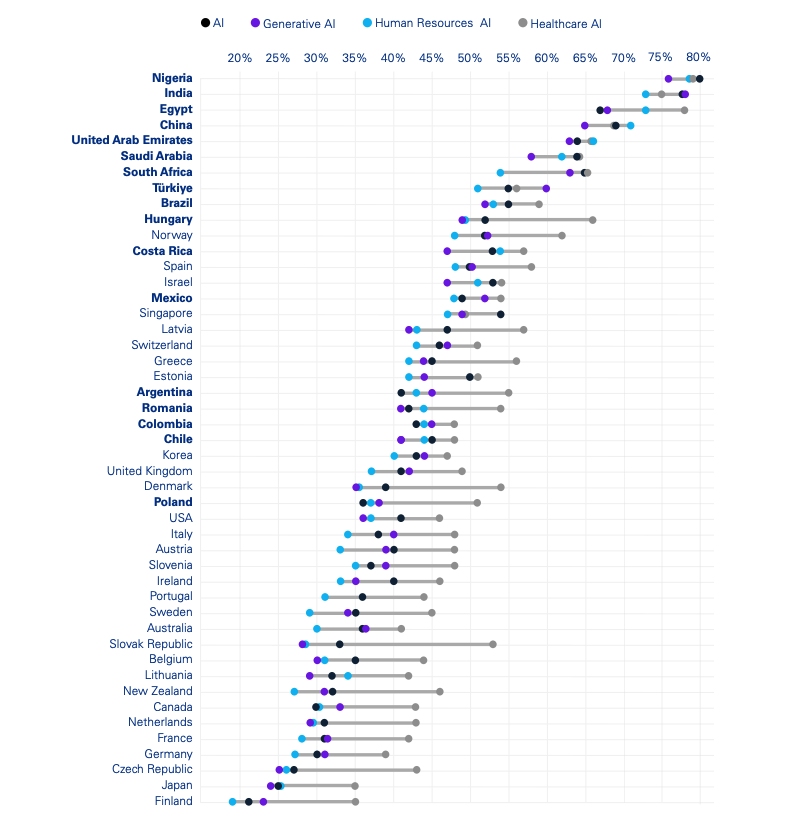
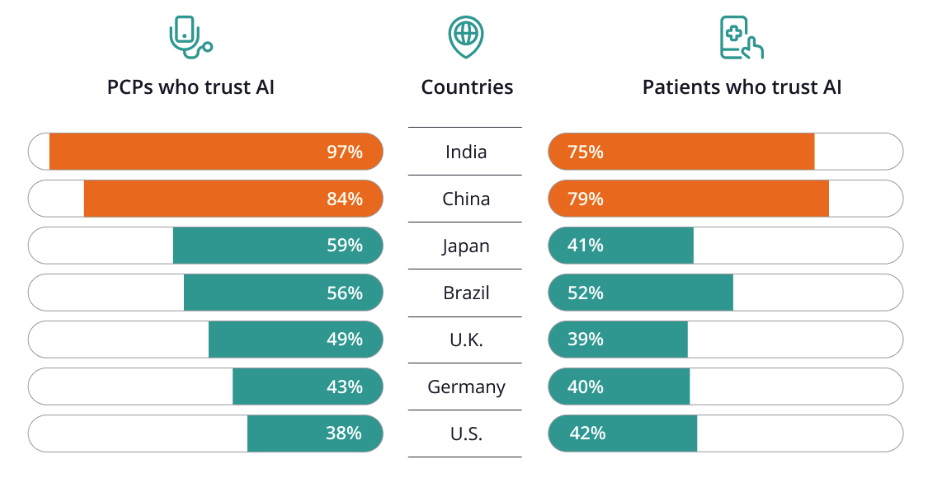
Trust in AI isn't uniform across markets. Primary-care physicians in India and China report 97% and 84% willingness to trust AI. Germany sits at 43%, the U.S. at 38%. Patient trust mirrors the same gradient, and varies sharply by task. In Germany, 87% of patients accept AI for diagnostics. That drops to 25% for triage. Meet clinicians and patients where they are. Sequence by task. Build from there.
Sources
- ZS Future of Health Survey. Base: 12,000 healthcare consumers and 1,199 PCPs across U.S., India, China, Brazil, U.K., Germany, Japan.
- Gillespie N, Lockey S, Ward T, Macdade A, Hassed G (2025). Trust, attitudes and use of artificial intelligence: A global study 2025. University of Melbourne & KPMG. DOI: 10.26188/28822919
- Baldus J et al. Patient trust in AI in radiology: task-specific analysis. Insights into Imaging 2026. DOI: 10.1186/s13244-025-02159-3
78% are trying. Proficiency stays flat.
Curiosity is high. Roughly 78% of employees say they're updating their AI skills. Only 22% aren't. But self-study alone doesn't lift proficiency to the level care work needs. Watching tutorials and experimenting on your own doesn't build the judgment that clinical work requires.
Source
- AI Proficiency Report 2025. Section. June 2025.
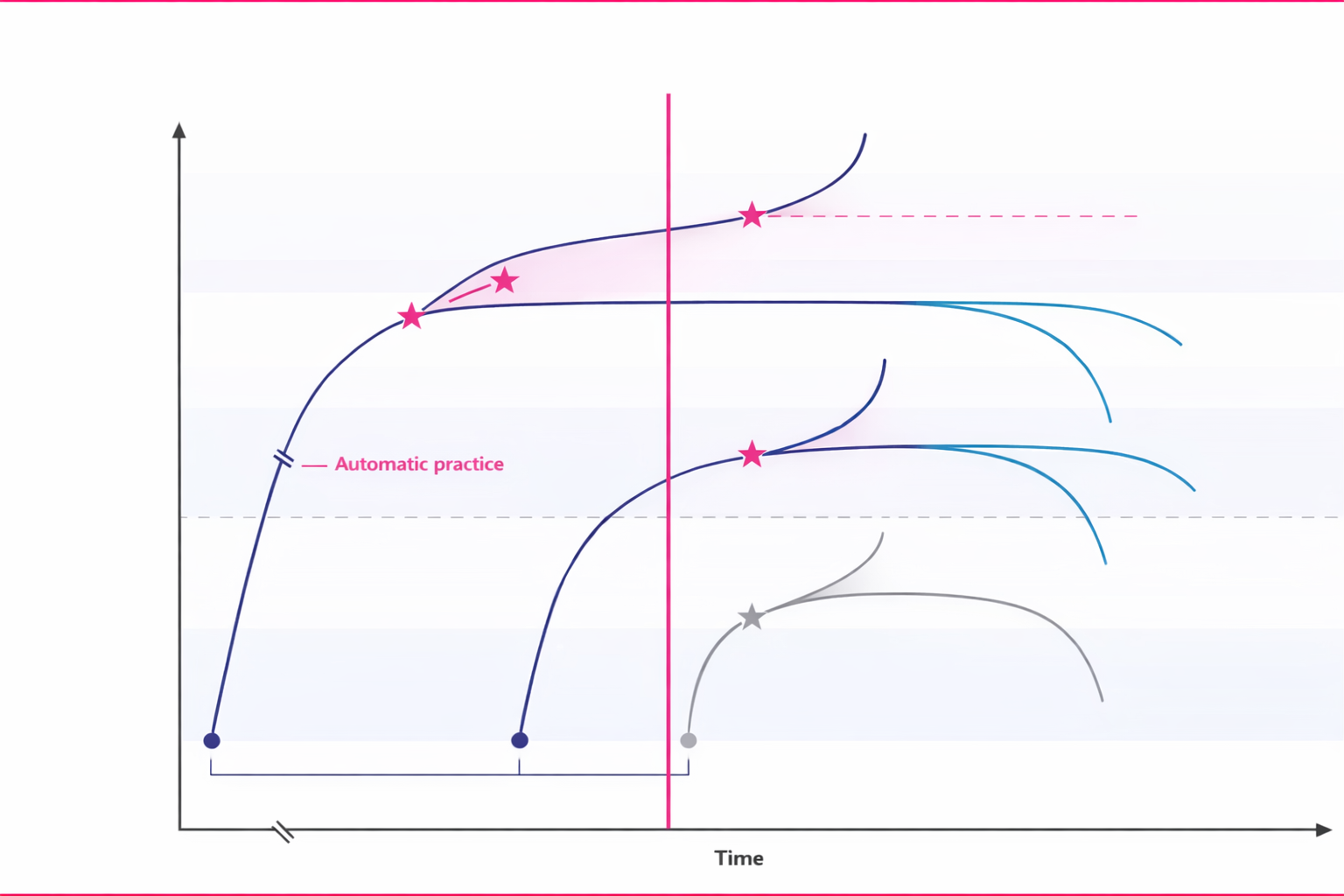
When AI arrives, performance splits three ways.
Unstructured exposure to AI isn't neutral. Clinicians who adapt actively improve. Those who rely passively on AI outputs mis-skill or deskill. The difference isn't talent. It's whether structured guidance was in place when AI arrived.
Sources
- Berzin TM et al. Preserving clinical skills in the age of AI assistance. The Lancet 2025; 406(10513): 1719.
- Abdulnour RE, Gin B, Boscardin C. Educational Strategies for Clinical Supervision of Artificial Intelligence Use. N Engl J Med 2025; 393(8): 786-797. DOI: 10.1056/NEJMra2503232
The autopilot trap is real.
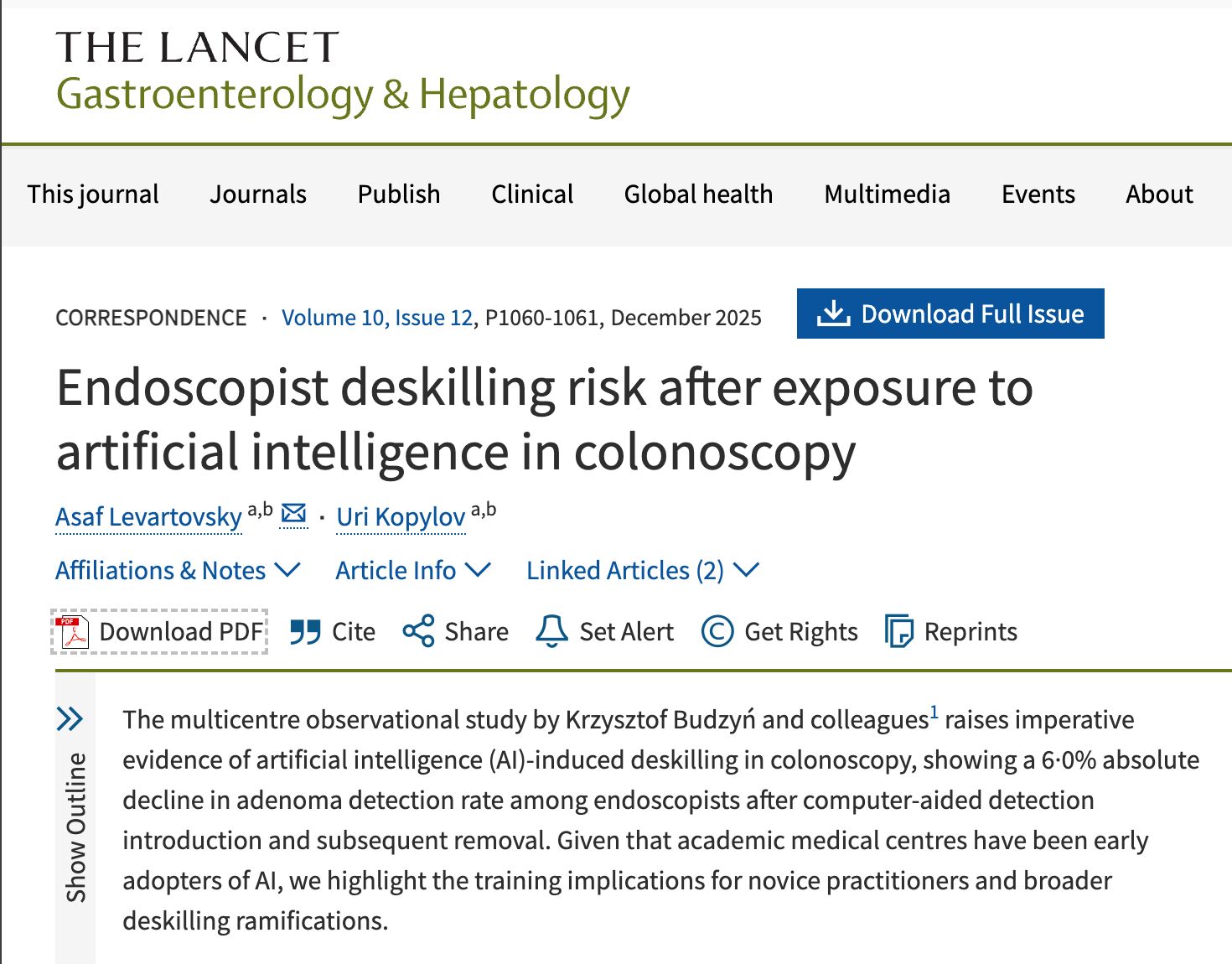
A multicentre observational study of endoscopists exposed to AI in colonoscopy showed measurable deskilling. The findings: passive reliance on AI degraded human performance. After AI introduction and subsequent removal, adenoma detection rates fell by 6.0 percentage points.
"Passive reliance degrades skill. Active collaboration sharpens it."
And training alone doesn't fix it. An RCT (Succi et al., NEJM AI, 2026) enrolled physicians who completed 20 hours of structured AI literacy training. When the AI gave wrong recommendations, diagnostic accuracy still fell from 84.9% to 73.3%, a 14-point drop. Structured education is necessary. It is not sufficient without the habits to override.
The way out is structured practice, not just structured learning. Apply where it helps. Question when context is off. Document the role AI played in the decision.
Sources
- Budzyński K, Romańczyk M, Kitala D et al. Endoscopist deskilling risk after exposure to artificial intelligence in colonoscopy: a multicentre, observational study. The Lancet Gastroenterology & Hepatology 2025; 10(10): 896-903. DOI: 10.1016/S2468-1253(25)00133-5
- Succi MD et al. Effect of Erroneous Large Language Model Recommendations on Physician Diagnostic Accuracy. NEJM AI 2026. DOI: 10.1056/AIoa2501001
What AI-fluent practice looks like.
Fluency isn't abstract. It's what a nurse does when she spots a bad AI recommendation and adjusts. What a doctor does when a patient asks why the AI said what it said. What a team does when it decides to override the output.
A nurse
who spots when an AI recommendation doesn't fit the patient in front of her, and adjusts the plan.
A doctor
who can explain to a patient what AI did and didn't do in reaching a recommendation.
A team
that treats AI as a partner, not an oracle. Documents how AI was used. Decides when to override it.
HelloAI is the structured program to close the gap.
HelloAI is a structured learning program for healthcare professionals, led by GE HealthCare and built with clinical and academic partners. Free to enroll. Designed for healthcare, not adapted from a generic AI course.
healthcare professionals
since 2018
countries
live events
registrations Jan–May 2026
vs 2,000 in all of 2025. Demand is accelerating.
most popular: Foundations
Learners want a credible crash course, not deep technical training
expert speakers
Why HelloAI, not something else.
Healthcare-specific
Built for clinicians, not industry-agnostic. Big Tech offers generic content at no cost. We don't.
Free to enroll
HelloAI Foundations and HelloAI Professional at no cost. Universities offer healthcare-specific programs at tuition cost. We don't.
Built with global leaders
GE HealthCare, KTH Royal Institute of Technology, Covista, British Institute of Radiology, plus 100+ named expert contributors.
Research from 51 enterprise AI deployments (Brynjolfsson, BCG/Stanford, 2026): 10% of AI value comes from the algorithm. 20% from data and infrastructure. 70% from how people work. Most health systems spend the budget on the first two. HelloAI is the third.
KLAS independently validated (2026): ambient AI scribe delivers 26.8% documentation time reduction and $2,629/provider/month impact, but only where clinicians were trained and workflows redesigned. The tool is table stakes. Fluency is what delivers the return.
Start where you are.
Find your fit
Take the 30-second quiz. Land on the right module. Enroll free.
Take the quizEnroll a cohort
Send your professionals through the 20+ hour HelloAI Professional curriculum together.
Professional moduleBook a workshop
Bring HelloAI Executive to your leadership team. Strategic planning, governance, ROI.
Executive workshopTech will keep evolving. The real question is, will we?